
Some people can snag a baseline interest rate of 6.99% with a competitive personal loan from Discover. That’s a far cry from the double-digit APRs that usually hit borrowers who haven’t done their homework.
California’s credit market follows a predictable, if somewhat cold, logic. For a borrower in San Diego or Los Angeles, the gap between a decent rate and a bad one translates to thousands of dollars lost over the life of a loan. It’s math, not emotion. People walk into a branch expecting a handshake and leave with a spreadsheet they don’t really understand.
Modern lending is simple in theory: your destination depends on your starting point. If you’re looking for a lump sum to fix up a kitchen in Santa Monica or consolidate high-interest credit card debt, the sheer variety of options can be overwhelming. You aren’t just picking a lender; you’re picking a specific set of mathematical constraints.
Lenders generally fall into two camps: traditional institutions and digital-first companies. Each looks at your income, employment history, and that one number that matters most, your credit score, differently. Some lenders care about where you’ve been; others care more about your ability to pay them back tomorrow.
The Arithmetic of Unsecured Capital
When you borrow money without putting up your house or your car as collateral, you’re in the world of unsecured lending. This is how most Californians access quick cash. Because the lender takes on more risk, they want more certainty, which usually means higher interest rates or a much harder screening process.
The amounts change depending on where you look. For instance, Cal Bank Trust offers unsecured loans ranging from a $2,500 minimum up to $100,000. That range covers everything from a small emergency to a major life change. It’s a wide net, but you need a certain level of financial stability to cast it successfully.
Take Elena, a freelance graphic designer in Sacramento. She needs $15,000 to upgrade her workstation and software before a big contract kicks off. She doesn’t want to mortgage her home, so she’s looking at unsecured options. For her, the choice isn’t just about the total amount; it’s about how that $15,000 is amortized over the next few years.
If she picks a term that’s too short, her monthly payments might swallow too much of her variable income. If she stretches it out too long, she’ll end up paying way more in interest than the equipment is actually worth. It’s a balance. Finding Fast Loans California becomes a matter of comparing those monthly payments against her actual cash flow.
Interest rates aren’t static. They move based on the Federal Reserve and, more importantly, your personal risk profile. A person with a 740 credit score is looking at a very different reality than someone struggling to pay their utility bills. The math doesn’t care about your intentions; it only cares if you can actually pay it back.
Navigating the Credit Score Spectrum
Not everyone starts from a position of strength. For many, the main obstacle is a credit history that looks more like a cautionary tale than a success story. The California market has specific channels for these people, but it’s not a dead end, it’s just a more expensive path.
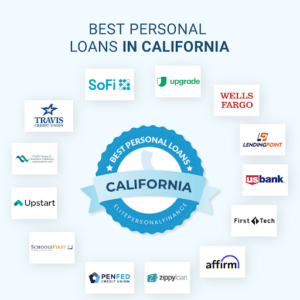
Your options depend on who you target. For those with subprime scores, the field is narrower. According to LendingTree, the best personal loans in California for bad credit often come from specialized lenders like Upstart, OneMain Financial, Prosper, and San Diego County Credit Union.
The trade-off is almost always immediate. You’re paying for the privilege of being trusted. If you need cash fast to fix a car transmission or cover a medical deductible, the speed of the loan might be worth the long-term interest cost. It’s a pragmatic, if sometimes painful, calculation.
To understand how this looks in practice, consider these common loan structures:
- Fixed-rate loans: Your monthly payment stays the same for the whole term. It’s the safest bet for budgeting.
- Variable-rate loans: The interest rate can change, which can lead to higher payments if market conditions shift.
- Personal Lines of Credit: A revolving balance you can draw from as needed, similar to a credit card but often at a lower rate.
- Lump Sum Loans: You get all the money at once and start paying it back immediately.
It’s a math game. If you can’t win, you shouldn’t play. People often treat a personal loan like “free money,” but it’s actually just an expensive way to buy time. Using a loan to pay off a different, more expensive debt can be a smart move, but using it to fund a lifestyle you can’t afford is a quick way to a debt spiral.
Comparing the Terms and Total Costs
The real cost of a loan is rarely just the interest rate. You have to look at the APR, which includes interest plus any fees you pay to get the money. A 10% rate with a 5% origination fee isn’t actually a 10% loan. The math is deceptive if you only look at the headline number.
Some lenders are more flexible once you have the debt. For example, Cal Coast Credit Union allows for loans with terms up to 60 months and includes a “no prepayment penalty” clause. That’s a big deal. If you get a tax refund or a bonus, you want to be able to kill the debt early without being punished for it.
Let’s look at how these numbers move in a real scenario. Take a $30,000 loan, which is a lot of money for most Californians. The monthly cost depends entirely on the rate and the length of the term. If you take five years to pay it off, that interest adds up fast.
| Loan Amount | APR (Estimated) | Term (Months) | Monthly Payment (Approx) |
|---|---|---|---|
| $10,000 | 12.88% | 36 | $338 |
| $25,000 | 15.00% | 60 | $595 |
| $30,000 | 18.00% | 60 | $764 |
The difference between a 12.88% rate and an 18% rate on a $30,000 loan isn’t just a few dollars. It’s thousands of dollars over the life of the loan. That’s the difference between a new car and a used one, or a vacation and a kitchen remodel. The numbers are loud. Listen to them.
When comparing lenders, look for transparency. If a lender is vague about their fees or how they calculate their APR, walk away. The digital age has made it easy to find info, but it’s also made it easier for companies to hide the fine print behind “flexible terms” and “fast funding.”
The Mechanics of Loan Approval
Securing a loan is basically proving you’re reliable to a stranger. Lenders look at your debt-to-income ratio, the percentage of your gross monthly income that goes toward existing debt. If you already spend 40% of your paycheck on rent and car payments, a new loan looks risky to a bank, even if you make a high salary.
Verification is getting faster and more automated. Some lenders can send funds as early as the next business day if your paperwork is in order. This speed is a double-edged sword. It’s great for emergencies, but it also means you have less time to decide if you actually need the money or if you’re just reacting to financial stress.
The paperwork has changed, too. You used to walk into a branch with a stack of paper pay stubs. Today, most lenders want a digital connection to your bank account through services like Plaid. They want to see your real-time cash flow, not a piece of paper that might be outdated by the time they read it.
Preparation is the only way to handle the “easy” vs. “hard” dilemma. If you want the easiest approval, you’ll usually pay the highest price. If you want the best rate, you’ll probably have to provide more evidence and wait longer for a decision. There’s no such thing as a free lunch in the California credit market. You either pay with interest or you pay with time and paperwork.
The digital divide is closing, but convenience is expensive. Even as technology streamlines the process, the economic principles haven’t changed. Borrowing is a transaction of risk, and risk is always priced into the deal.
The trajectory of personal lending suggests a move toward even more automated, data-driven decisions that may soon look at more than just a FICO score.
Good to know
What are the best personal loans in California?
The best loans depend on your credit score, but top options include credit unions for lower rates and online lenders for fast funding.
Which bank will give a personal loan easily?
Banks with flexible credit requirements or online lenders like SoFi and Upstart are generally easier to qualify with than traditional big-name banks.
Which bank is the easiest to get a personal loan with?
Online lenders are typically the easiest because they use automated underwriting to provide faster approvals and higher approval rates.
How much would a $30,000 personal loan cost a month?
A $30,000 loan with a 5-year term at a 12% interest rate would cost approximately $666 per month.
Are there specific regulations for personal loans in California?
Yes, California lenders must comply with state-specific usury laws and the California Financing Law to protect borrowers from predatory practices.